

What to Read in October
How do we take care of Nobody?

There is a maple tree I’ve been watching for almost ten years now. It boasts the most glorious yellow leaves I’ve ever seen each fall before it succumbs. I knew I wasn’t going to actually watch it turn golden but there was something comforting in paying attention to its invisible effort. So while the sun is still out in the early evenings, I’ve been taking my books out to read and to watch.
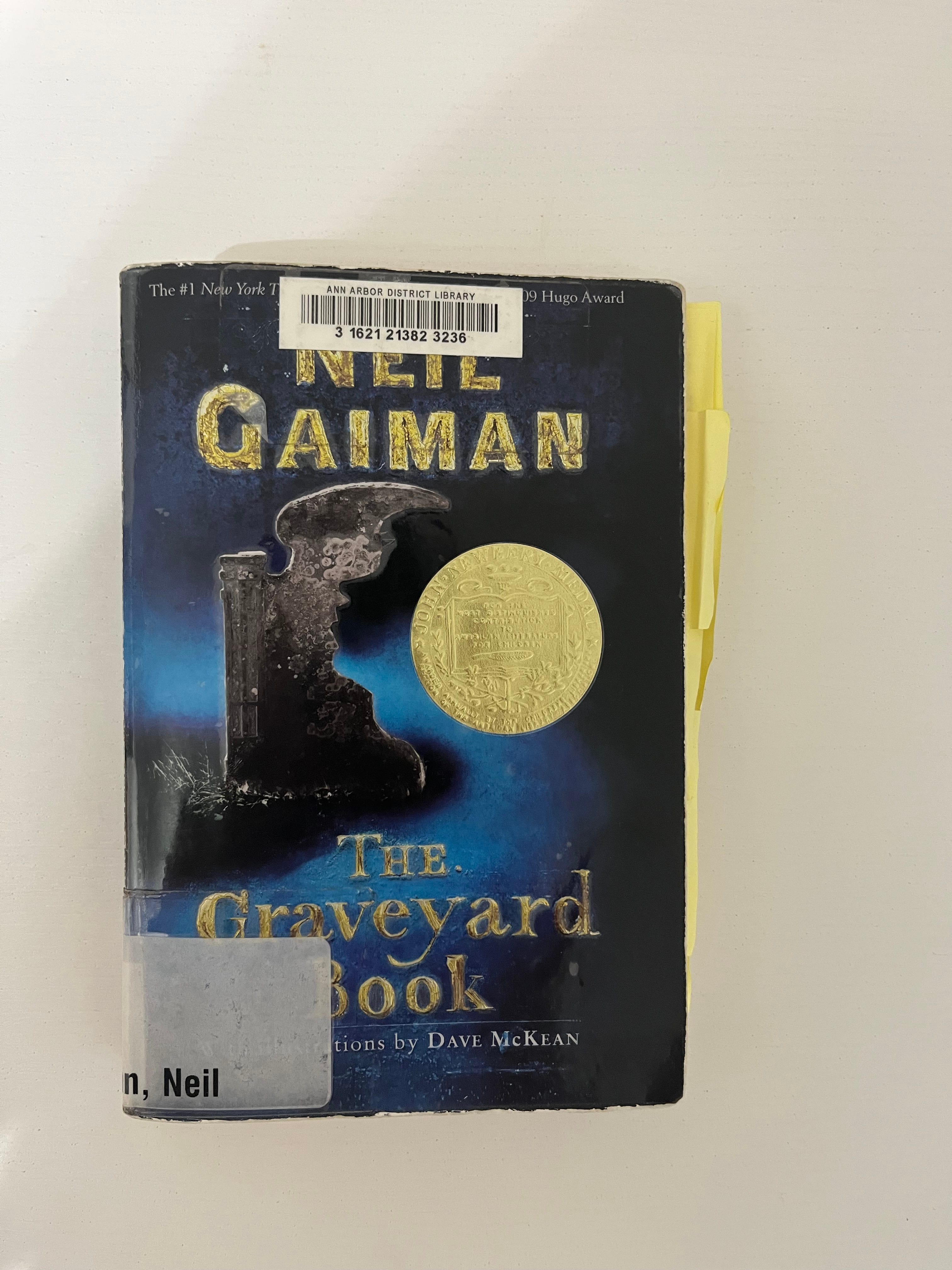
Except Neil Gaiman’s The Graveyard Book is spooky. I don’t know if I’ve read a scarier beginning to a story. It is so horrible, so gruesome, so nightmarish, I had to come inside and continue reading it on the couch in the waning light of autumn.
But continue reading, I did.
A family is killed by a man named Jack. He slays them all save for a baby who climbs out of his crib, and walks up the street to a graveyard. This is where the baby will grow into a boy and then a teenager. He will be taken care of - nurtured and reared and loved - by a bunch of dead people.
The dead name him Nobody Owens.
Jack comes looking for the baby. That same night he walks to the graveyard, knife in hand, ready to kill again, but he is met by a stranger he assumes is the caretaker.
“Somewhere the child you seek awaits you,” the stranger tells Jack, “but he is not here.”
The stranger’s words send Jack on the hunt for the child, completely missing the call to search for the child the man Jack once was. I think that’s what the stranger was trying to tell him - that it would’ve been becoming like the child Jack once was (or could’ve been), that is in seeing the world with hope and curiosity - that would’ve put to rest Jack’s belief that he must kill anyone that threatens him.
Because that’s why Jack kills. He is threatened. He is afraid. And he believes he must destroy whatever threatens him. This, he believes, is how one stops being afraid.
The Graveyard Book is a story because of Jack, but it’s not a story about him. It’s about Nobody, and I think Gaiman’s decision to make Nobody the hero of the story gives readers the opportunity to put ourselves in Nobody’s shoes. We have a chance to watch Nobody act with courage and creativity. We hear him question and wonder. If Nobody is the hero, and we can relate to him, if we want to relate to him, maybe everybody has a chance to be like Nobody.
I also think Gaiman named him Nobody in an effort to reclaim the word, and our association with it.
“Don’t worry about them, they’re nobody.”
“You’re nobody. You’ll never amount to anything.”
Of course it’s not that dramatic and harsh. We don’t talk like that (anymore). We know better. I think though, of some of my students who rarely speak in class, but I know want to. I think of the ones who’ve been incarcerated, the ones who are homeless, the ones that don’t know what they want to do with their lives but they know they want to live them. Am I treating them with kindness and respect? Am I setting up an environment for whatever it is they want and need to say? Am I helping them shape themselves?
How we take care of Nobody is how we take care of everybody and it is the dead in The Graveyard Book who teach us that. It is the witches and the haunts that illuminate humanity. The irony. But maybe that’s because they aren’t afraid anymore. Maybe they’ve learned that the parts of themselves they believed were bad or not good enough, or needed to be protected are actually parts that have been waiting to be used.
They are the parts that Nobody wants and Nobody needs.
I love this analysis! (Adding to my TBR list now)
I read it several years ago.
I love the line of yours: "and it is the dead in The Graveyard Book who teach us that." I will be thinking about that as I work on the Jommelli Requiem, which we will sing for All Souls. What does ol' Niccolo have to teach me?